
Which raw materials are best suited for soft capsules? A complete guide

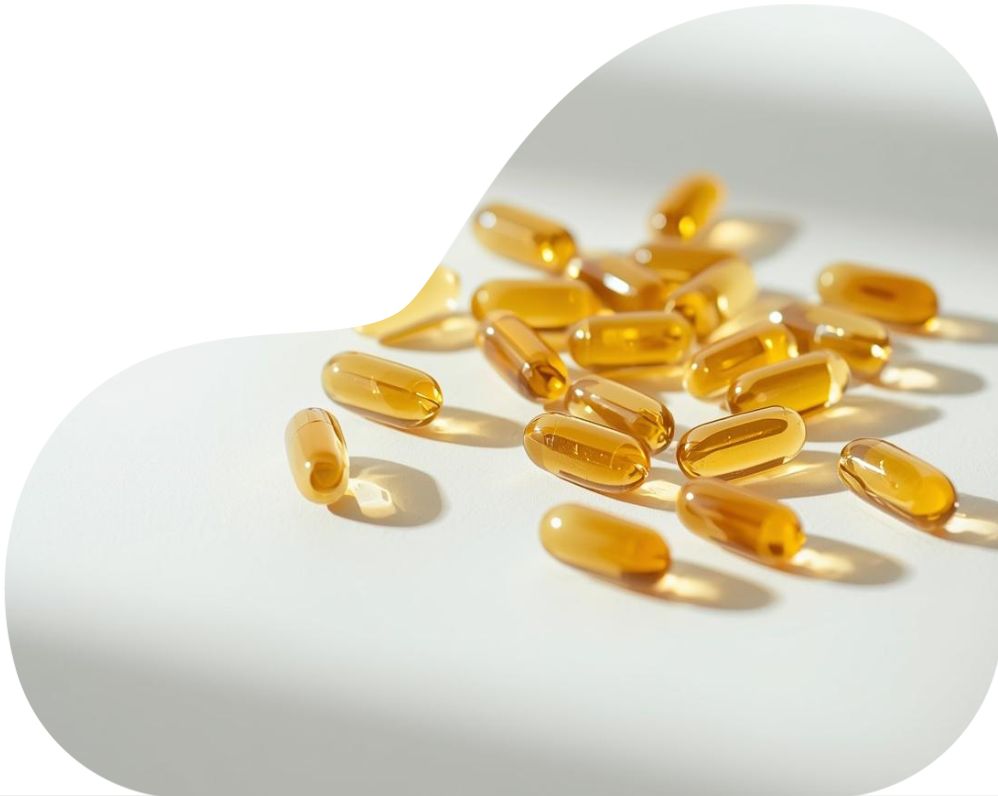
What you will learn after reading this article
- Softgel capsules are mainly designed for Liquid and oily substances.
- The best compatibility they show lipophilic components (Omega-3, vitamins A, D, E, K).
- Hermetic shell protects raw materials from oxidation and loss of stability.
- Water and hygroscopic raw materials are incompatible with softgel technology.
- Solid components can only be used as stable suspensions in an oil carrier.
Why are oils the primary input for soft capsules?
Softgel technology enables the hermetic encapsulation of liquid or semi-liquid substances in a one-piece gelatin shell. This method is primarily used for ingredients sensitive to oxidation and those requiring precise dosing in an oil form. Below, we analyze which groups of raw materials demonstrate the best compatibility with this manufacturing process.
Lipophilic substances naturally complement the softgel form because they do not react with the aqueous base of the gelatin shell. The most commonly used components include Omega-3 fatty acids, fat-soluble vitamins (A, D, E, K), and plant oils such as evening primrose or borage. The hermetic seal effectively protects these sensitive compounds from rancidity caused by air exposure. Additionally, the liquid form often exhibits better bioavailability compared to tablet equivalents.
How are suspensions and pastes processed?
Apart from pure oils, this technology allows for the encapsulation of suspensions, meaning solid particles dispersed in an oil carrier. This facilitates the combination of mineral ingredients or plant extracts with a fatty base in a single dose. A capsule contract manufacturer must ensure the appropriate viscosity of the mixture to prevent sedimentation, or the settling of solid particles at the bottom, before sealing the form. This process requires precise homogenization of the input, guaranteeing an even distribution of the active substance in each piece.
When should aqueous raw materials be avoided?
Soft capsules are incompatible with fillings containing water or hygroscopic substances that may migrate to the shell. Moisture within the filling leads to the softening of the gelatin structure, resulting in deformation, leaks, or sticking of the final product. If the use of aqueous components is necessary, technologists apply special emulsifiers or hydrophilic carriers, such as polyethylene glycol (PEG), to stabilize the system. An alternative is also the use of hard capsules, better suited for powdered and dry materials.
Key information about capsule production
Softgel technology is primarily dedicated to liquid substances, oils, and lipophilic suspensions, providing them protection from external factors. The key limitation of the process is the lack of tolerance for water in the filling, which could damage the shell structure. For solid ingredients requiring suspension in fat, precise viscosity control is necessary to prevent mixture separation. This method guarantees high stability for fat-soluble vitamins and Omega acids, eliminating the risk of their oxidation.
FAQ
What happens to the capsule upon contact with water inside?
Moisture from the filling penetrates the shell, causing its gradual dissolution and loss of rigidity. This leads to physical damage to the product and leakage of the contents.
Which vitamins are best contained in softgel form?
The optimal choice includes fat-soluble compounds, namely the A, D, E, and K groups. The oil form supports their stability and absorption in the body.
Can powder be encapsulated in soft capsules?
Direct encapsulation of dry powder is not a standard procedure in this technology. Solid ingredients should first be dispersed in an oil carrier to create a stable suspension.


